Jesse Watson’s Pitch Meeting at Wagner
The Other Black GirlJesse Watson’s pitch meeting at Wagner Books is the moment Nella Rogers’s hope of winning a high-profile author’s project collides with her growing suspicion that Hazel-May McCall is changing people through her hair grease. The meeting first presents Jesse as an exciting professional opportunity; as he describes his proposed book and Nella studies his altered appearance, that opportunity becomes evidence of Hazel’s reach.
Arrival and Expectations
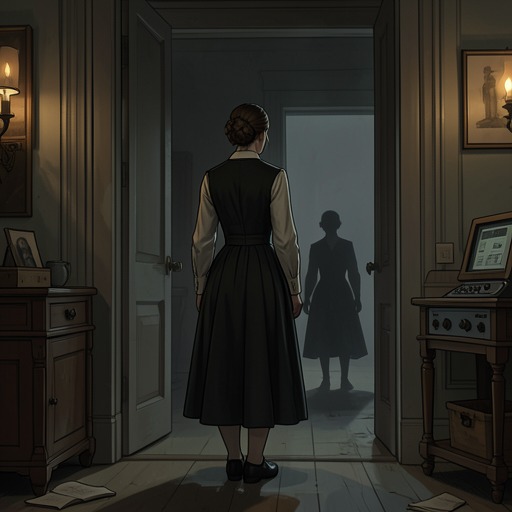
The meeting is scheduled for noon in Wagner’s small conference room, a room coworkers call the most intimate in the office. Nella Rogers expects Jesse to be late: she arrives fifteen minutes early, believing that this will still leave time before his arrival. She has heard him joke in his CP Time segment, “I show up when I show up.” But when she checks her phone for the third time and steps inside, Jesse is already there. He sits at the far end of the table with a blue fortieth-anniversary Wagner mug and a ballpoint pen, then rises to greet her. His warmth and polished voice make an immediate impression; Nella, starstruck, is flustered despite having imagined the meeting in advance.
The encounter quickly becomes a group meeting. Hazel is initially away from her desk, and Nella wonders whether she has stayed home or is mixing another batch of hair grease. Then Jesse greets Hazel with a forceful embrace, and she takes the chair Nella had declined. Richard Wagner smiles across the table. The ease of Jesse and Hazel’s reunion gives Nella a first reason to notice the personal connections shaping what is ostensibly a professional discussion.
The Proposal and the Room’s Hierarchy
Richard introduces Nella to Jesse as one of Wagner’s finest assistants, praising her sharp eye. His emphatic delivery carries a warning that Nella understands, even as she replies that she and Jesse have already met. Nella keeps her attention on the goal she has set for herself: win Jesse over, make him want to work with her, and leave Wagner. Richard and Amy then invite Jesse to explain why he has come to the publisher.
Jesse says he has avoided the spotlight for about a year because the news, politics, and social media became overwhelming. He took a break, he explains, and while sitting in a park an idea came to him: a graphic novel. Nella asks whether there was a particular breaking point behind his retreat, but another participant cuts in to suggest that Jesse should finish first. The small interruption establishes the meeting’s tension: Nella wants to question and assess the proposal, while the senior people in the room are trying to manage the conversation around their prospective author.
Jesse describes a positive story about two main characters from different backgrounds, one relaxed and one uptight, who are brought together, perhaps as police officers, and teach each other despite their differences. Nella compares the premise to a graphic-novel adaptation of Lethal Weapon; Jesse responds that Mel Gibson is a hero of his. She then tests whether he might actually want Wagner’s help writing something more politically forceful, naming police brutality, bussing, housing projects, and healthcare as possible subjects. Jesse says those matters can be discussed, but he does not want them to be the focus of his book. The exchange clarifies the gap between the socially urgent material Nella expects from a prominent author and the lighter, familiar buddy-story he wants to tell.
Recognition of Hazel’s Influence
Nella has spent weeks imagining what Jesse might be like, cycling through possibilities that include a diva, a Black hippie, or a space cadet. The person before her fits none of them. He seems washed out and unusually tidy, wearing clear plastic glasses frames she has not seen in his photographs or videos. His beard is closely cropped, the tiny twists he used to wear are gone, and his hair lies flat, smooth, and faintly shiny with grease. These details matter because they contrast with the look Nella remembers, not because she is merely surprised by a new style.
As the realization takes hold, Nella feels drawn to look toward Hazel. The narrative links that physical turn to what she understands about Jesse’s changed appearance and to her earlier suspicion about Hazel’s hair grease. Hazel meets her gaze with a smug, unbridled look of triumph. The sequence makes Hazel’s welcome of Jesse newly charged: her embrace and apparent happiness at his arrival now sit beside Nella’s recognition that his altered presentation may not be an ordinary change of grooming. The scene strongly signals Hazel’s involvement, while leaving the precise process and extent of Jesse’s alteration unstated here.
The Meeting’s Turn and Significance
The meeting’s value for Nella shifts sharply. She enters focused on the chance to impress Jesse and secure a route out of Wagner; she leaves the discussion, at least momentarily, unable to treat the proposal as an ordinary editorial problem. She begins coughing as her throat dries, stands, and asks to be excused. Richard grants permission. The scene ends with her stepping away from the table rather than resolving either the pitch or her suspicion in the room.
The pitch therefore works on two levels. Its account of Jesse’s creative intentions establishes what he wants from a publisher, while the close attention to his hair and Hazel’s expression reveals what Nella believes is happening around him. The ordinary business of an author meeting—introductions, questions, and a proposed book—becomes the setting for a private recognition that threatens Nella’s plan to use the meeting as an escape from Wagner. The decisive turn is not a decision about whether the manuscript fits the list, but Nella’s recognition that Hazel’s influence may already have reached the person she hoped to recruit.